

Unit Price:
৳ 95.00
(1 x 10: ৳ 950.00)
Strip Price:
৳ 950.00
Indications
Fezotan tablet is indicated for the treatment of moderate to severe vasomotor symptoms due to menopause.
Pharmacology
Fezolinetant is a neurokinin 3 (NK3) receptor antagonist that blocks neurokinin B (NKB) binding on the kisspeptin/neurokinin B/dynorphin (KNDy) neuron to modulate neuronal activity in the thermoregulatory center. Fezolinetant has high affinity for the NK3 receptor (Ki value of 19.9 to 22.1 nmol/L), which is more than 450-fold higher than binding affinity to NK1 or NK2 receptors.
Treatment with fezolinetant did not show any clear trends in sex hormones measured (follicle-stimulating hormone, testosterone, estrogen, and dehydroepiandrosterone sulfate) in menopausal women. Transient decrease of luteinizing hormone (LH) levels was observed at peak concentrations of fezolinetant.
Treatment with fezolinetant did not show any clear trends in sex hormones measured (follicle-stimulating hormone, testosterone, estrogen, and dehydroepiandrosterone sulfate) in menopausal women. Transient decrease of luteinizing hormone (LH) levels was observed at peak concentrations of fezolinetant.
Dosage & Administration
Take a single 45 mg Fezolinetant tablet orally once daily with or without food. Take Fezolinetant with liquids and swallow whole. Do not cut, crush, or chew tablets. Administer Fezolinetant orally at about the same time each day. If a dose of Fezolinetant is missed or not taken at the usual time, administer the missed dose as soon as possible, unless there is less than 12 hours before the next scheduled dose. Return to the regular schedule the following day.
Pediatric Use: The efficacy and safety of Fezolinetant in individuals less than 18 years of age have not been established.
Geriatric Use: There have not been sufficient numbers of geriatric women involved in clinical trials utilizing Fezolinetant to determine whether those over 65 years of age differ from younger women in their response to Fezolinetant.
Pediatric Use: The efficacy and safety of Fezolinetant in individuals less than 18 years of age have not been established.
Geriatric Use: There have not been sufficient numbers of geriatric women involved in clinical trials utilizing Fezolinetant to determine whether those over 65 years of age differ from younger women in their response to Fezolinetant.
Interaction
Fezotan is a substrate of CYP1A2. Concomitant use of Fezotan with drugs that are weak, moderate, or strong CYP1A2 inhibitors, increase the plasma Cmax and AUC of Fezotan. Fezotan is contraindicated in individuals using CYP1A2 inhibitors.
Contraindications
Fezolinetant is contraindicated in women with any of the following conditions:
- Known cirrhosis
- Severe renal impairment or end-stage renal disease
- Concomitant use with CYP1A2 inhibitors
Side Effects
Common side efects of Fezotan include:
- stomach (abdominal) pain
- diarrhea
- difculty sleeping
- back pain
- hot fashes or hot fushes
- nausea
- vomiting
- itching
- yellowing of the eyes or skin (jaundice)
- pale feces
- dark urine
- pain in the right upper stomach (abdomen)
Pregnancy & Lactation
There are no data on Fezolinetant use in pregnant women to evaluate for a drug-associated risk of major birth defects, miscarriage, or adverse maternal or fetal outcomes. There are no data on the presence of fezolinetant in human milk, the effects on the breastfed child, or the effects on milk production. It is not known if fezolinetant is present in human milk.
Precautions & Warnings
Hepatic Transaminase Elevation and Hepatotoxicity: Elevations in serum transaminase concentrations greater than 3 times the upper limit of normal (ULN) occurred in the clinical trials. Perform hepatic laboratory tests prior to initiation of Fezotan to evaluate for hepatic function and injury. Patient should not start Fezotan if the concentration of alanine aminotransferase (ALT) or aspartate aminotransferase (AST) is equal to or exceeds 2 times the ULN or if the total bilirubin is elevated (for example, equal to or exceeds 2 times the ULN) for the evaluating laboratory. Patient should perform follow-up hepatic laboratory tests monthly for the frst 3 months, at 6 months, and 9 months after initiation of therapy.
Overdose Effects
Treatment of overdose consists of discontinuation of Fezotan therapy with institution of appropriate symptomatic care.
Storage Conditions
Store below 30°C. Keep away from light and out of the reach of children.
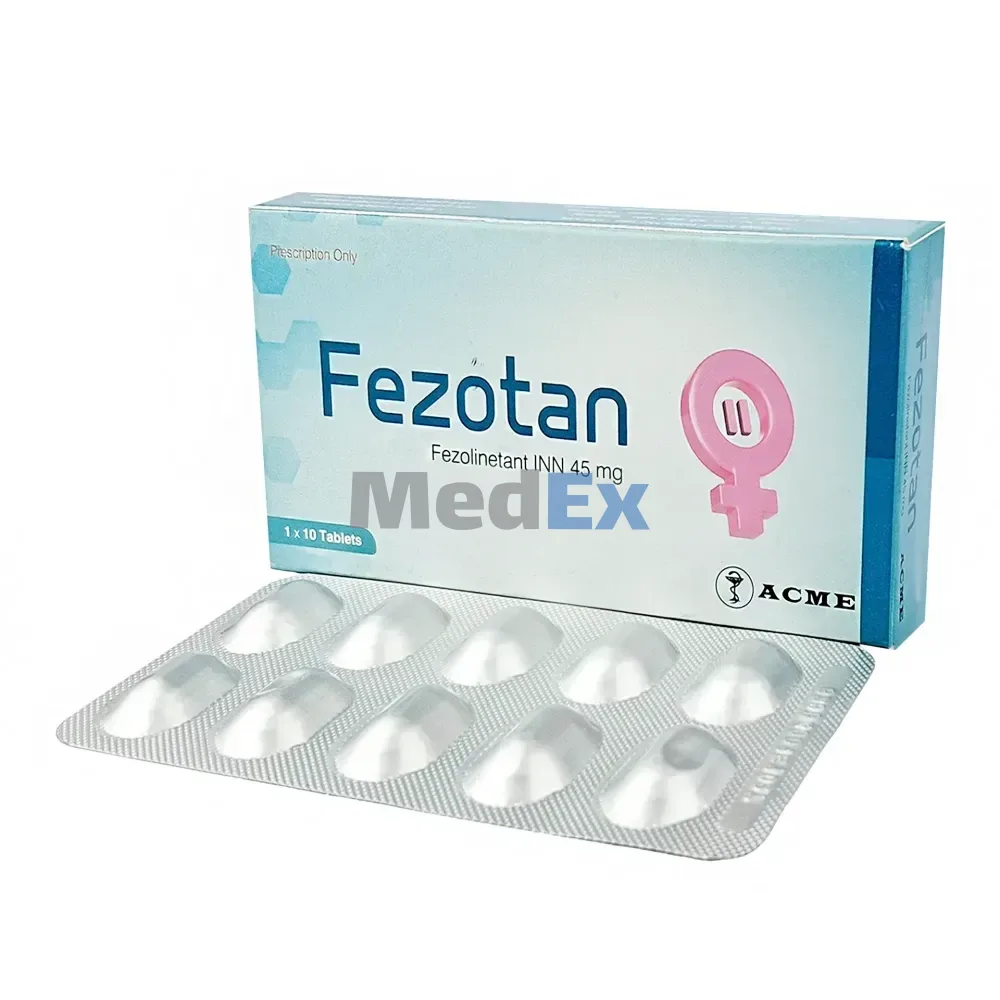 Pack Image: Fezotan 45 mg Tablet