

1 ml ampoule:
৳ 29.90
(5 x 5: ৳ 747.50)
Also available as:
Indications
হায়োসিন বিউটাইলব্রোমাইড একটি এন্টিকোলিনার্জিক ওষুধ, এবডোমিনাল ক্যাভিটির বিভিন্ন অংশের নরম মাংসপেশীর (smooth muscle) উপর যার খিঁচুনিবিরোধী (antispasmodic) ক্রিয়া রয়েছে। হায়োসিন বিউটাইলব্রোমাইড ট্যাবলেট গ্যাসট্রো ইন্টেসটিনাল ট্র্যাক্টে অথবা জেনিটো-ইউরিনারী ট্র্যাক্টের ভিসেরাল খিঁচুনি জনিত লক্ষণসমূহে নির্দেশিত। স্পাসমোডিক ডিসমেনোরিয়াতেও এটি নির্দেশিত। হায়োসিন বিউটাইলব্রোমাইড ইনজেকশন গ্যাসট্রো-ইন্টেসটিনাল খিঁচুনি এবং রেনাল অথবা পিত্তের (billary) তীব্র ব্যথাতেও নির্দেশিত। রেডিওলজীতে প্রতিবন্ধকতার পার্থক্যমূলক রোগ নির্ণয়ে, পাইলোগ্রাফীতে খিঁচুনি ও ব্যথা কমাতে এবং গ্যাসট্রো-ডিওডেনাল এনডোস্কোপীর মত রোগ নির্ণয়ের অন্যান্য পদ্ধতিতেও খিঁচুনির সমস্যা দূর করার জন্য হায়োসিন বিউটাইলব্রোমাইড ইনজেকশন ব্যবহার করা হয়।
Dosage & Administration
খাওয়ার জন্য-
- প্রাপ্ত বয়স্ক: ২০ মিগ্রা দিনে চার বার। স্পাসমোডিক ডিসমেনোরিয়ার ক্ষেত্রে ঋতুস্রাব (menstruation) শুরুর সম্ভাব্য তারিখের কমপক্ষে দুদিন আগে থেকে চিকিৎসা শুরু করতে হবে এবং স্রাব শুরুর তিনদিন পরে পর্যন্ত তা অব্যাহত রাখতে হবে।
- শিশু ৬ থেকে ১২ বৎসর পর্যন্ত: ১০ মিগ্রা দিনে তিনবার অথবা চিকিৎসকের নির্দেশ অনুযায়ী।
- প্রাপ্তবয়স্ক: মাংসপেশীতে বা শিরাপথে প্রয়োগের জন্য সাধারণ মাত্রা হচ্ছে ২০ মিগ্রা (১টি এ্যাম্পুল), প্রয়োজনে যা কিনা ৩০ মিনিট পর পুনরায় প্রয়োগ করতে হবে। এনডোস্কোপীর ক্ষেত্রে এই মাত্রা আরো ঘন ঘন প্রয়োগ করতে হবে।
Contraindications
যে সব রোগীর প্রস্টেটিক বৃদ্ধি ঘটেছে তাদের ক্ষেত্রে এর ব্যবহার নিষিদ্ধ এবং বৃদ্ধদের ক্ষেত্রে এটি সতর্কতার সাথে ব্যবহার করতে হবে। যে সব রোগী প্যারালাইটিক ইলিয়াস অথবা পাইলোরিক ষ্টেনোসিসে ভুগছেন তাদের ক্ষেত্রেও ওষুধটির ব্যবহার নিষিদ্ধ। সম্ভাব্য মাইড্রিয়াটিক ক্ষতির কারণে যে সব রোগীর গ্লুকোমা রয়েছে তাদের ক্ষেত্রেও এটির ব্যবহার নিষিদ্ধ ।
Side Effects
হায়োসিন বিউটাইলব্রোমাইড এর পার্শ্ব-প্রতিক্রিয়ার মধ্যে রয়েছে মুখ শুকিয়ে যাওয়া, পিউপিল এর প্রসরণ (dilatation), ইন্ট্রা-অকিউলার প্রেসার বৃদ্ধি, ফ্লাসিং, ত্বক শুকিয়ে যাওয়া, ব্র্যাডিকার্ডিয়া এবং তারপরেই ট্যাকিকার্ডিয়া ও এরিমিয়া। কখনো কখনো ক্লান্তি, বমি, মাথা ঝিমঝিম (giddiness) এবং ষ্ট্যাগারিং হতে পারে।
Pregnancy & Lactation
গর্ভাবস্থার প্রথম তিন মাসে অন্যান্য ওষুধের মতো একেও সতর্কতার সাথে ব্যবহার করতে হবে।
Precautions & Warnings
সাবধানতা: হায়োসিন ঝিমুনি সৃষ্টি করতে পারে ও মানসিক সতর্কতা নিজে করে নিস্তেজ করে দিতে পারে। যে সকল রোগী হায়োসিন দিয়ে চিকিৎসাধীন রয়েছে তাদের গাড়ী বা অন্যান্য যানবাহন অথবা মানসিক একাগ্রতার অভাবে দুর্ঘটনা ঘটতে পারে এমন কোন যন্ত্রপাতি চালানো উচিত নয়। রোগীদের মদ্যপান করা থেকেও বিরত থাকা উচিত।
সতর্কতা: থাইরোটক্সিকোসিস, কার্ডিয়াক অপর্যাপ্ততা (insufficiency) বা ফেলিওর এবং হৃদপিন্ডে অস্ত্রোপচারের ক্ষেত্রে এই ওষুধ হৃদপিন্ডের গতি আরো বাড়িয়ে দিতে পারে বলে এর ব্যবহারে সতর্কতা অবলম্বন করা উচিত। অন্যান্য এন্টিকোলিনার্জিক ওষুধসমূহ যেমন এমানটেডিন, কোন কোন এন্টিহিস্টামিন, বিউটাইরোফেনন ও ফেনোথায়াজিন এবং ট্রাইসাইক্লিক এন্টিডিপ্রেসেন্ট হায়োসিনের সাথে একত্রে প্রয়োগের ফলে হায়োসিনের ক্রিয়া বেড়ে যেতে পারে বিধায় এ সব ক্ষেত্রে হায়োসিন ব্যবহার করতে হলে এর মাত্রা কমিয়ে নেয়া প্রয়োজন হতে পারে।
সতর্কতা: থাইরোটক্সিকোসিস, কার্ডিয়াক অপর্যাপ্ততা (insufficiency) বা ফেলিওর এবং হৃদপিন্ডে অস্ত্রোপচারের ক্ষেত্রে এই ওষুধ হৃদপিন্ডের গতি আরো বাড়িয়ে দিতে পারে বলে এর ব্যবহারে সতর্কতা অবলম্বন করা উচিত। অন্যান্য এন্টিকোলিনার্জিক ওষুধসমূহ যেমন এমানটেডিন, কোন কোন এন্টিহিস্টামিন, বিউটাইরোফেনন ও ফেনোথায়াজিন এবং ট্রাইসাইক্লিক এন্টিডিপ্রেসেন্ট হায়োসিনের সাথে একত্রে প্রয়োগের ফলে হায়োসিনের ক্রিয়া বেড়ে যেতে পারে বিধায় এ সব ক্ষেত্রে হায়োসিন ব্যবহার করতে হলে এর মাত্রা কমিয়ে নেয়া প্রয়োজন হতে পারে।
Therapeutic Class
Anticholinergics (antimuscarinics)/ Anti-spasmodics
Reconstitution
ডেক্সট্রান কিংবা ০.৯% সোডিয়াম ক্লোরাইড ইনজেকশনের তরল দিয়ে হায়োসিন বিউটাইলব্রোমাইড ইনজেকশনকে তরলীকরণ করা যাবে।
Storage Conditions
মেয়াদ উত্তীর্ণের পর ব্যবহার করবেন না। সকল ওষুধ শিশুদের নাগালের বাইরে রাখুন। কেবলমাত্র রেজিস্টার্ড চিকিৎসকের ব্যবস্থাপত্র অনুযায়ী বিতরণযোগ্য।
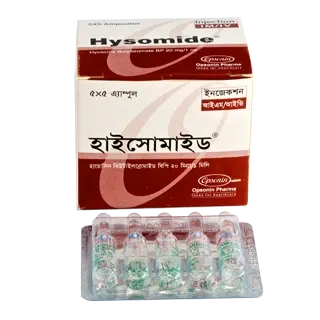 Pack Image: Hysomide 20 mg Injection